Most of you know me from the apps I build, the tech projects I launch, and the business updates I share over at sharifmia.com . You usually see the finished products, the screen recordings, and the entrepreneurial grind. But today, I’m putting the laptops aside and showing you the map.
Between 2022 and 2025, I decided I needed to see how the rest of the world operates. That decision turned into a four-year sprint across South Asia, the Middle East, Southeast Asia, and East Asia. Eight countries. Countless flights. A completely shifted mindset.
When you travel while running a business, you stop looking at cities just as tourist destinations. You start seeing the infrastructure, the culture of commerce, and the way different people solve everyday problems. Let me be honest: stepping out of your comfort zone changes how you write code, how you manage teams, and how you view your own life.
Here’s a look back at the journey that completely rewired my perspective over the last four years.
The Awakening (2022 – 2023)
Every major shift in life starts with a single step out the front door. For me, the first couple of years were about breaking the routine and seeking entirely different environments.
India: The Initial Spark (July 2022)
My first major trip was to India. If you’ve never been, nothing can truly prepare you for the sheer scale of the place. It’s loud, massive, and constantly moving.
What struck me immediately was the hustle. The culture shock wasn’t just in the food or the crowds; it was the realization of how vast the world is right next door. Navigating the chaotic streets of India was the spark I needed. It forced me to be highly adaptable, a skill that directly translates into handling unpredictable business challenges back home.
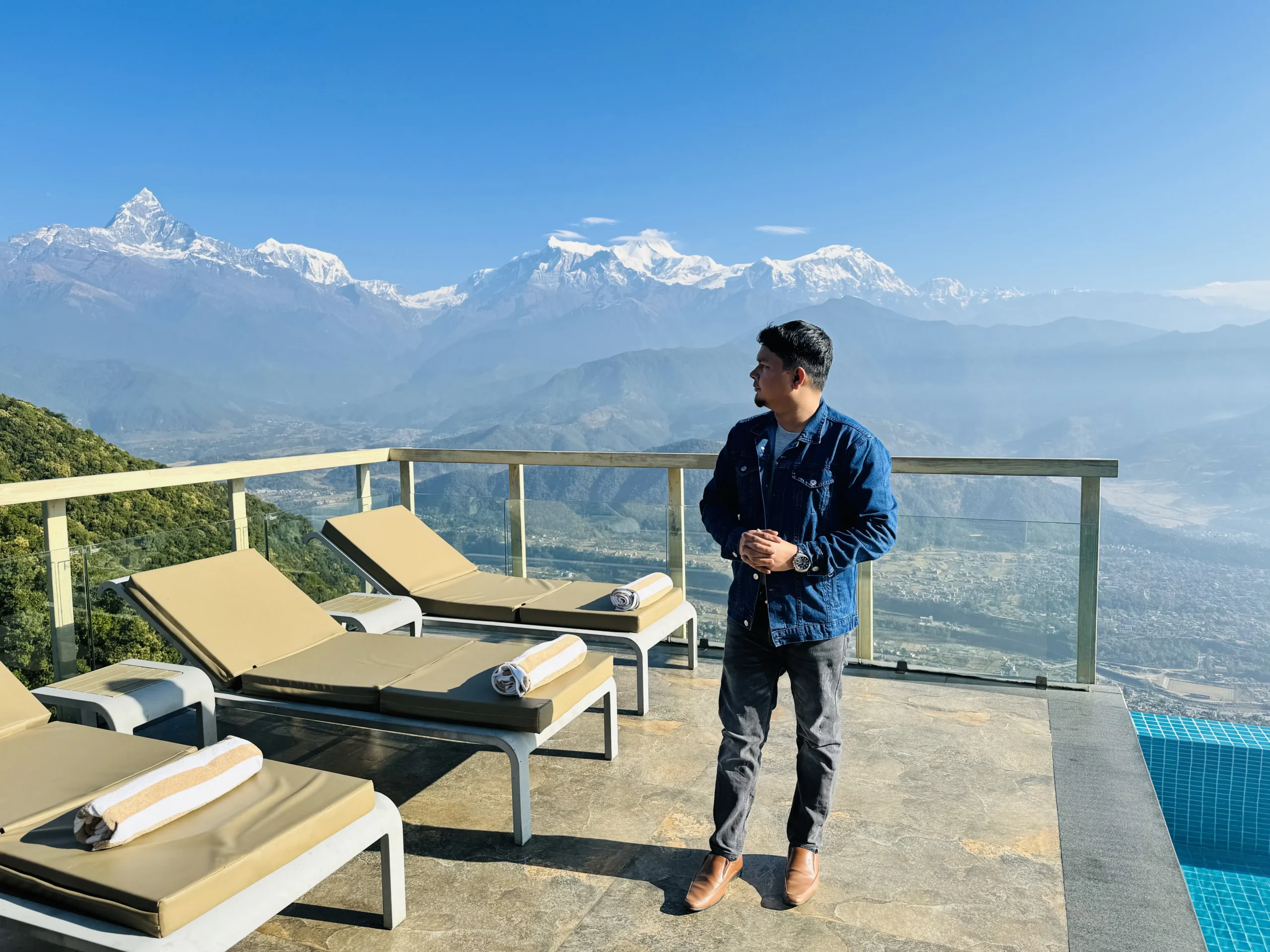
Nepal: The Stark Contrast (November 2023)
By late 2023, I needed a change of pace. I traveled to Nepal, and the contrast to my daily life in Bangladesh (and my previous trip to India) was staggering.
Going from relentless city hustle to the calm, mountainous serenity of Nepal was a massive reset for my brain. The air was different, the pace of life was slower, and the people had a quiet resilience. It taught me that productivity doesn’t always mean moving at 100 miles per hour. Sometimes, the best ideas come when you finally give yourself permission to sit in silence.
Saudi Arabia: The Spiritual Reset (Dec 2023 – Jan 2024)
Ending one year and starting a brand new one in Saudi Arabia performing Umrah was profoundly life-changing.
There is a unique kind of clarity that comes from stripping away all your worldly titles and standing shoulder-to-shoulder with millions of people from every corner of the globe. From a personal standpoint, it was the ultimate spiritual reset. It grounded me, reminding me why I work so hard and what truly matters at the end of the day. If you ever have the opportunity to disconnect and focus entirely on your faith for a few weeks, do it. It rebuilds your foundation.
The Southeast Asia Sprint (2024)
If 2023 was about grounding myself, 2024 was about acceleration. Southeast Asia is arguably the most dynamic region on the planet right now, and I wanted to see it firsthand.
Vietnam: Energy and Street Hustle (August 2024)
Vietnam is a masterclass in pure, unadulterated energy. I spent August navigating the buzzing streets, surrounded by thousands of motorbikes and incredible street food vendors.
What most people miss about Vietnam is the fierce entrepreneurial spirit of the locals. Every single person seems to be running a side business. The digital nomad scene there is booming, but I was more fascinated by the local vendors. Watching them operate taught me a lot about maximizing efficiency in small spaces with limited resources. It’s a beautifully chaotic, highly functional society.
Thailand & Malaysia: The Double-Header (November 2024)
November was a logistics test. Hitting Thailand and Malaysia in a single month required tight planning.
I started in Thailand, taking in the vibrant, somewhat wild streets of Bangkok. It’s a city that never really turns off, heavily reliant on a massive tourism engine. Then, I hopped over to Malaysia. The shift was immediate. Kuala Lumpur offers a striking, modern skyline with incredibly polished infrastructure. Comparing the two was fascinating. Bangkok felt like an explosion of culture and commerce, while Kuala Lumpur felt like a calculated, highly organized corporate hub. Both work perfectly, just using completely different blueprints.
The Frontier: Tranquility and Business (2025)
By 2025, my travel style had evolved. I was no longer just looking for new sights; I was looking for hidden opportunities and professional growth.
Laos: The Hidden Gem (January 2025)
Why Laos? Because almost no one talks about it. While everyone rushes to Bali or Phuket, Laos remains quietly tucked away.
Personally, I think it’s the most underrated country in Southeast Asia. It possesses an untouched beauty and a much slower pace compared to its loud neighbors. Spending time there reminded me of the value of staying under the radar. Not every business needs to be the loudest in the room to be successful. There is massive value in quiet, consistent quality.
China: The Business Level-Up (Oct – Nov 2025)
This was the big one. Shifting from a standard tourist visa to a business visa entirely changed the context of my travel.
China operates on a scale that is genuinely difficult to comprehend until you are standing in the middle of it. According to the World Bank’s data on infrastructure, China’s high-speed rail network is the largest on earth, and you feel that efficiency everywhere. Seeing how automated their supply chains are, how cashless their society has become, and how quickly they build was an incredible learning experience. It completely raised my standards for what I expect from my own tech projects. If you want to see the future of mass commerce, you have to look East.
The Bangladeshi Passport Reality
Let me be real with you for a second. Traveling to eight countries in four years sounds glamorous on paper. But doing it with a Bangladeshi passport? That is a project management job in itself.
According to the latest global rankings from the Henley Passport Index, our passport requires serious legwork for global mobility. You don’t just book a flight and pack a bag. It requires months of planning, gathering financial documents, writing cover letters, and showing immense patience at embassy windows.
But here’s the thing: it is absolutely possible. Yes, the visa processes can be difficult and sometimes frustrating. But every stamp you get makes the next one slightly easier. It builds a history of trust. If you are holding a green passport and dreaming of seeing the world, don’t let the visa requirements stop you. Treat it like a business problem. Do the research, prepare the paperwork flawlessly, and make it happen.
Frequently Asked Questions
Which of these 8 countries was the easiest to visit with a BD passport?
In my experience, Nepal is incredibly straightforward for Bangladeshi citizens, often offering visa-on-arrival or very simple e-visa processes. Malaysia and Thailand are also relatively smooth once you understand their specific e-visa or embassy requirements, provided your financial documents are in order.
How do you manage your business while traveling so often?
It comes down to aggressive time blocking and building reliable systems. I rely heavily on asynchronous communication with my team and make sure all my tech infrastructure is cloud-based. I also dedicate specific “work days” during my trips where I don’t sightsee at all.
What is the biggest difference between a tourist visa and a business visa?
A tourist visa is strictly for leisure and restricts you from engaging in local commerce. A business visa, like the one I used for China, often requires an official invitation letter from a host company in that country. It allows you to attend meetings, source products, and negotiate contracts legally.
Is traveling to these countries expensive?
It entirely depends on how you travel. Southeast Asian countries like Vietnam and Laos are incredibly budget-friendly for food and accommodation. Saudi Arabia and China, on the other hand, require a much higher daily budget, especially if you are traveling for business or religious purposes.
The Next Stamp
These eight countries did more than just fill up the pages of my passport. They taught me patience in embassy waiting rooms, resilience in crowded Indian train stations, spiritual peace in Saudi Arabia, and the sheer scale of global business in China. Every single trip heavily influenced the way I operate sharifmia.com today.
Now, the map is open again. I’ve explored the dense cities of South Asia, the spiritual heart of the Middle East, and the booming economies of the Far East. But the world is massive, and I’m ready to plan the next move.
Based on my travel history over the last four years, where do you think I should go next? What country makes sense for my next chapter? Drop your country suggestions in the comments below—I’m reading all of them!